Wednesday, 30 October 2019

Kunoichi: Female Ninjas

Kunoichi is a modern term used to refer to women who served as Ninjas in medieval Japan.  The term most likely is phonetic – as the Kanji character for woman 女 is composed of three strokes which also occur in the Japanese phonetic alphabet く(Ku), ノ (No), and, 一 ( Ichi ).

Roles and Disguises

Ninjas are famous for their stealth – sneaking into places in the dead of night, striking with a quick flash of steel, then fading back into the shadows.  And while female ninjas did receive similar combat training to their male counterparts, their roles used stealth in a much different way.  Kunoichi served as spies, using their unassuming nature as women to infiltrate targets, passing on information to their allies or getting close enough to pull off a quick assignation.  These roles required months or years, with some even requiring a lifetime.  The women were often required to use intimate means to keep and hold a target’s trust over long periods of time.

Possibly the most famous Kunoichi was Chiyome.  A widow of the nephew of a powerful Daiymo (Lord)  Shingen, she was asked by Shingen to gather girls and train them in espionage.  The girls were collected young and were often orphans.  They were trained to be mediums.  Japan, a religious country at the time, allowed great freedom of movement to religious practitioners, and they were often trusted implicitly because of their “connections” to the divine.  This allowed the women to gather information without being suspected.  Chiyome reportedly trained over 200 women to be these traveling spies.

Tools of the Kunoichi

The Kunoichi had two very popular tools that served them well.  The first was Neko-te.  These were like tiger claws that could be slipped onto a finger similar to a thimble.  The sharp tip could be dipped in poison in order to make a scratch lethal.  Because of their small size, they were easy to hide in clothes.  Another popular weapon was a bladed fan.  Japan gets very hot in the summer, so women were expected to carry fans around to keep cool.  Having a fan with hidden blades was an easy way to carry a weapon around with one at all times, hidden in plain sight.  Finally, they would sometimes use a metal box with a false bottom to have their things carried between cities.  This false bottom could hold a person, allowing them to sneak  a male ninja into a guarded compound when required.

Conclusion

Kunoichi had roles just as important as male ninjas, though they served in a very different way.  Many a Samurai fell victim to these master infiltrators, whether through direct assignation or through their divulgence of their secrets.

Want to be a ninja?
See our Ninja Swords >


source https://www.bladespro.co.uk/blogs/news/kunoichi-female-ninjas

Wednesday, 16 October 2019

Honjo Masamune – The Best Katana Ever Made

The Greatest Swordsmiths

Masamune and Muramasa are credited as being the two best Japanese swordsmiths who ever lived.  Their blades were so good that they were often described as having mystical properties.  While the swordsmiths lived over 500 years ago, some of their swords survive today.

Masamune and Muramasa were described as having very different temperaments, and the swords they created were said to be imbued with traits embodied in the swordsmiths who forged them.  One legend perfectly describes this.  In the story, Masamune and Muramasa are taking part in a sword competition to determine which of them is the best.  The swords are suspended over a river.  Muramasa’s sword cuts everything that touches it, while Masamune’s blade cuts only the leaves, leaving the fish unharmed.  Muramasa quickly claims victory.  However, a traveling monk who is judging the competition declares Masamune’s blade superior, for while Muramasa’s blade did not distinguish between friend or foe and bloodthirstily cut everything it could, Masamune’s blade spared that which was good, and cut only what it must.  

The Greatest Blade

The greatest sword Masamune ever forged was called the Honjo Masamune, after a 16th century general Honjo Shigenaga and Masamune himself.  In 1561, Honjo fought a duel against an enemy general who wielded said sword.  When Honjo won by striking the enemy’s helmet so hard it split in twain, he claimed the sword as his own.  Many decades later, he sold the sword to the ruling Toyotomi clan, who lost it to the new Shogun (military dictator) when he took power.  The sword then passed from Shogun to Shogun until the Tokugawa Shogunate eventually fell.  Even after losing power, the family managed to keep the sword.

At least, until the end of WWII, when Japan lost the war and the Allies came looking for booty.  The Allies demanded all the nobility in Japan hand over their familiar swords.  As you can imagine, the nobles were livid at this demand.  However, Tokugawa Lemasa, who possessed the sword at that time, decided to set an example and gave up his family’s collection.  The sword immediately disappeared from history, and its whereabouts are still unknown.  However, all hope is not lost.  Someone recently (2013) brought a sword to the Kyoto National Museum, and it was later to be determined to be one of Masamune’s make (The Shimazu Masamune), rediscovered after disappearing from historical records for over 150 years.  Thus, the Honjo Masamune might still be out there, hidden in some unsuspecting family’s trinkets or owned by a knowledgeable but secretive private collector.

Fun Fact

Powerful swords in video games are often named after Masamune and Muramasa. 

See our Swords


source https://www.bladespro.co.uk/blogs/news/honjo-masamune-best-katana-ever-made

Wednesday, 2 October 2019

Tsukahara Bokuden - the Wandering Swordsman

Tsukahara Bokuden was a famed duelist who lived in the 15th – 16th centuries.  Living almost 80 years before Miyamoto Musashi, he is considered one of the most forward-thinking Samurai of all time.  This is his story.

Early Life

Bokuden was born Asako, to a priest of the Yoshikawa family who served the local Kashima clan.  Early in life, he was adopted by the Tsukahara’s, an extended branch of the Kashima clan, due to the early death of his adopted father’s biological son.  Thus, his name became Tsukaraha Shin’emon Takamoto. 

Bokuden learned Tenshin Shoden Katori Shinto, one of the oldest Japanese martial arts.  Having mastered the style at the still-young age of 17, he desired to continue his studies, so he traveled throughout Japan, learning from the finest living swordsman of his day.  From a rich family, he did not do this alone, but with a large retinue.

Student Traveler

During this journey, he took part in nearly 20 duels and 40 engagements.  He managed to kill 21 warriors of note.  Around the age of 20, he meant a famed swordsman Ochiai Torazaemon.  Bokuden challenged Ochiai to a duel, which Ochiai accepted dismissively.

Ochiai was twice Bokuden’s age, so he did not consider Bokuden a threat.  Much to his surprise, Bokuden quickly defeated him.  While duels could be to the death, Bokuden chose to let Ochiai live.  Ochiai, humiliated by the defeat, dishonorably laid an ambush for the young Samurai.  When Ochiai attacked, Bokuden had only a moment to react.  Drawing his Wakizashi in an instant, Bokuden fatally wounded Ochiai, who spent his dying moment questioning why Bokuden didn’t draw his Katana.  Bokuden replied that the shorter sword better suited the small distance he had to work with.

See our Wakizashi Swords >

Bokuden would often return home to visit his adopted family, and on one such occasion his father saw fit to cement Bokuden’s place as future clan leader by having Bokuden marry his daughter, Bokuden’s adopted sister.

Bokuden didn’t fight only swordsman.  In one duel, he fought a vicious man Kajiwara Natago, who used the Naginata (a sword on a stick). Kajiwara was famous for causing great pain with his strikes, leaving his opponent to die in horrible agony.  Bokuden simply cut off the sword blade from the rest of the weapon, leaving his opponent defenseless.  Bokuden then easily dispatched Kajiwara.

2 New Fighting Styles

Having gained so much experience, Bokuden eventually developed his own sword-fighting style.  Claiming to have received it from the deity his biological father served, he named it the Kashima Shinto-Ryu (Single cut style).  After his many years of traveling, he went back and served in his daimyo’s (Lord’s) army until retirement age, about age 37.  Then, he opened his own sword school.  One of the students he taught would become a future Shogun (military dictator) of Japan.

As Bokuden aged, he began to turn his thoughts away from how to kill an opponent to how to avoid fighting one in the first place.  This was partially because he was tired of all the young uptight swordsman constantly challenging him because of his renown.  In one instance, he referred to this new fighting style as his “no-sword style”.

There is one famous instance that exemplifies this line of thought, and we would be remiss if we did not include it here.  One day, on a boat, a young, boisterous, and arrogant swordsman claiming to the best challenged all the passengers. The now-aged Bokuden was unimpressed, immediately drawing the attention of the challenger.  Bokuden agreed to a duel, claiming that he would defeat the youngster unarmed.  However, the duel should be held on a remote island so as not to disturb anyone.  The challenger agreed, and when they arrived at the island jumped off the boat and drew his blade.  Bokuden merely grabbed the boat’s paddle and pushed off, leaving the Samurai stranded.  As he paddled away Bokuden shouted “Here is my no-sword school!”

Death

Bokuden lived to the ripe old age of 83. Dying in 1571, he had killed over 212 people in total.  In all his duels, he had never been wounded, and in all his battles, he was wounded only 6 times, by only arrows.

Fun Fact

As stories often do, Bokuden’s skills have grown with the telling, and so many stories have been told about him that it is hard to separate fact from fiction.  One story that we know is false, however, is Bokuden’s supposed duel with other famed master Miyamoto Musashi (Bokuden died 13 years before Musashi was born).  In the story, during a dinner, Miyamoto challenged Bokuden to a duel.  Bokuden accepted, but when Miyamoto drew his blade and attacked, Bokuden calmly blocked the stroke with the lid of the pot he was eating from!

Master the Wakizashi like Bokuden
See our Wakizashi Swords >


source https://www.bladespro.co.uk/blogs/news/tsukahara-bokuden-wandering-swordsman

Wednesday, 18 September 2019

Wu Zetian – Sole Female Chinese Emperor

Empress Wu is the only recognized female Emperor in all of Chinese history, and the first of only two women to wear the yellow robes of the Emperor.

*Note to the Reader: Some of the people in this story have names that are very similar or identical in written English.  Thus, we refer to such people mostly by their titles and position*

From Lavish Beginnings

Wu Zetian was born in the same year as a total solar eclipse seen across China.  Her father was a successful businessman, and her mother was from a powerful family.  Li Yuan, a future Emperor, was close to the Wu family, and on his accession granted her father many senior managerial roles.

Because Wu’s family was so well-off, she was not expected to do the menial labor that women normally did.  So, while the servants did the work, she had to find something else to occupy her time.  Luckily for her, her father, unlike most men, encouraged her to read and develop an education, and luckily for him, she proved quite capable and interested.

At the young age of 14, she was taken as an imperial concubine. Because of her ability to read and write, she became a type of secretary as well.  While she did not seem to be much favored by the Emperor (only rank 5 out of 9), she did manage to attract the eye of one of the Emperor’s sons, and the two of them had an affair.

The Emperor died, and, as Wu had not had any children by him, she was consigned to a monastery to live out the remainder of her life. Fortunately for her, the prince she had an affair with, due to two disgraceful older brothers, ended up becoming the next Emperor, even though he was the youngest son. One day, the former prince came to offer incense to the late Emperor, saw her and remembered.  His Empress Wang was there too and saw his reaction.  Now, Empress Wang was not highly favored by the Emperor, who preferred Consort Xiao to Empress Wang.  Hoping that the arrival of a new concubine would distract the Emperor from Xiao, Wang told Wu to clean up and brought her back to the palace as a new concubine.

To the Top

Within a few years, Wu was of the first rank of concubines.  As time passed, the Emperor favored her more and more. When Wang and Xiao, who had been rivals, combined forces to counter this rising threat, it was too late and cost them dearly.

Wu was not one to take challenges to her power lying down.  By this point Wu had had two sons and a daughter by the emperor.  Soon after, Wu’s daughter died in suspicious circumstances, and Wang was framed, with Wu accusing Wang and her family of using witchcraft to kill the child. (Because of Wu’s later ruthlessness, some think she deliberately murdered her own daughter to remove Wang as a rival.)  Wang had no children, and the Emperor used this as a convenient excuse to depose her.  Wu took Wang’s place as the new Empress.

Wu stayed busy behind the scenes.  During the following year, the heir apparent was changed from Xiao’s oldest son to Wu’s.  The next year saw many officials who had spoken out against Wu’s replacement of Wang being exiled to remote provinces or killed.  3 years after that, and Xiao’s oldest son was arrested and exiled as well.  Also, during this time, the Emperor began to suffer from a debilitating illness.  Wu proved capable of helping with state affairs, and, over time, began to make more and more decisions for the Emperor until they were considered equal in power.

Eliminating the Competition

This continued for 4 years, and, eventually, the Emperor himself began to see Wu as a threat.  He asked a servant for advice, and the servant suggested that he depose Empress Wu.  The Emperor had that servant draft an edict deposing Wu as Empress.  Wu got wind of this and managed to arrive in person and plead her case.  The Emperor, always having a soft spot for Wu, could not go through with it.  Unfortunately for the servant, the Emperor chose to blame him to save face.  Furthermore, the servant had served on the staff of Xiao’s oldest son, the former heir-apparent.  Wu used this fact to link the servant with the former heir in a fabricated treasonous plot, causing the servant to be executed and the former heir to commit suicide.

Wu was intensely loyal to her mother (to whom the Emperor had lavished great honors, as well as to Wu’s late father), but not to anyone else in the family.  The Emperor decided to honor Wu’s older sister and her two brothers.  The brothers mentioned that they did not feel they deserved to receive the posts based solely on their relation to Empress Wu.  Wu’s mother was not happy, so Wu, in order to avenge her mother’s unhappiness, saw fit to exile her brothers to remote provinces.   Wu’s older sister had attracted the attention of the Emperor, and he considered taking her to the palace as another concubine.  Wu got wind of this and had her older sister poisoned and accused her brothers of doing it!  Thus, with one stroke, she got rid of her siblings.  After Wu’s mother died a few years later, her older sister’s son made it clear he suspected Wu of killing his mother.  Wu had him accused of dishonoring her mother’s memory and raping the daughter of an official.  He was then exiled and there eventually died.

The Death of Sons

The Emperor’s health eventually deteriorated enough that he considered making her regent.  However, he reconsidered when two officials advised against it.  Empress Wu continued eliminating all rivals.  The Emperor had shown favor to his aunt, whose daughter was married to Wu’s third son.  So, Wu had her own daughter-in-law arrested and starved to death.  Her first son, the heir, urged her to not take so much power to herself, and to allow his half-sisters, the daughters of Consort Xiao to marry.  Wu poisoned her son and his half-sisters quickly died.  Two more of the Emperor’s sons were accused of crimes and demoted.

Li Xian, her second son, became heir-apparent.  He heard some (untrue) rumors that he was not Wu’s son but Wu’s older sister’s and began to question his heritage.  Li also had a sorcerer that both Wu and the Emperor respected killed (probably because the sorcerer said he was not fit to be Emperor).  So, Wu had him accused of treason and planted a large number of weapons at his residence to back up her claim.  He was deposed and exiled, making his younger brother the new heir.

Around 8 years past, and the Emperor died.  Her third son Li Zhe took the throne, and Wu became Empress Dowager, the official title of the mother of the Emperor.  The late Emperor had written in his will for his son to take immediate power on his death and look to Wu for advice.  His son did the first part, but not the latter, instead being controlled by his wife.  He was caught wondering aloud if it would be bad to just give the Empire to his father-in-law. This was reported to Wu, and she took quick action, deposing her son and installing her fourth-and-youngest son as the new Emperor.  Wu took this time to execute her still-exiled second son.

Emperor in Truth

By this time, Wu was done with appearances.  While it was customary for the regent to still have the too-young-to-serve Emperor issue commands, even if they were crafted by the regent, Wu did away with this and just issued them herself.  The new Emperor never even got to move to the Imperial Suite, instead living in basic house arrest.  At one point, she offered to turn the Empire over to him, but at this point, fully aware of who she was, the “Emperor” declined to take power.  4 Years later, and she disposed with all pretense, taking the throne for herself and founding her own dynasty.

She was a great and terrible ruler.  Not terrible as in bad, she was eminently capable, as acknowledged by even her fiercest critics, but as in terrifying.   She had a secret police force that helped her take total control over the government.  In a far-off province, one of her exiles started a rebellion, and the same official who had told her of her son’s musing of turning over the Empire suggested she step down, as that should quell the rebellion.  He had apparently forgotten whom he was talking to and was summarily executed, along with all those who tried to defend him.

Her Empire began to corrode from within due to her constant paranoia of losing power.  Her secret police force was used by some unscrupulous men to gain power, making false arrests and executions in the name of maintaining order.  She summoned officials, but they were afraid of being falsely accused and executed, so they started a rebellion.  However, they did not coordinate very well, causing Wu’s forces to easily crush them.  Ironically, their very fear caused the thing they dreaded: their executions.

Wu’s deeds are too numerous to account, and most of them are quite interesting.  However, we do not have the space to recount them all here.  Suffice it to say, they followed much in the vein of what we have already told, with much terror, executions, paranoia, more executions, and, through it all, remarkable competence. 

Losing the Empire

Toward the end of her reign, Wu was getting old, and two of her nephews were pressuring her to name one of them as her successor.  However, her chief adviser thought the heir should be someone descended from the late Emperor instead and advised Wu to recall her third son Li Zhe from exile.  Wu changed the successorship from the Emperor-turned-crown prince back to Li Zhe.

Wu began to think of what would happen to the Empire after her death and foresaw a coming conflict between the Wu clan and the heir-apparent.  To try and prevent this, she had them swear an oath for peace.  Wu had fallen in love with two brothers, and as she grew older, their power waxed greatly, for she relied on them to handle an increasing amount of matters of state.  When her grandchildren saw this and began discussing it amongst themselves, one of the brothers found about it and told Wu; as punishment she had her grandchildren commit suicide.

The brothers began to worry what would happen to them if Wu died, so they falsely accused some of their rivals who were top officials and advisers of Wu.  They persuaded one of the servants of the accused to help them, but when he got before Wu to give witness, he told the truth.  Wu still exiled the accused but did not kill them.

The brothers and their brothers were accused of corruption, so Wu demoted the brothers’ brothers, but the two she was close to she did not.  She began to fall ill, and only the two were allowed to see her, even though her advisers asked her to see only her sons instead.  Wu eventually allowed one of her officials to investigate the corruption charges but rendered the investigation superfluous by pardoning one of them.

As her health declined, a coup was formed.  Men who were loyal to the heir Li Zhe killed the two brothers, then forced her to yield the throne to him.  Her son still honored her, and she was allowed to live in a palace.  When she died, he had her entombed with his father.

*Because of the disputed historicity of some of the events, liberties were taken in order to tell a cohesive story.*

See our Chinese Swords >


source https://www.bladespro.co.uk/blogs/news/wu-zetian-sole-female-chinese-emperor

Wednesday, 4 September 2019

The Knifemaking Legacy of Seki

Seki (sometimes Romanized as Sakai) is the home of the top knifemakers in all of Japan.  This knifemaking legacy actually draws its roots from a surprising source: swordmaking.  As we are all about swords here at BladesPro, we thought we’d investigate and see how this unique historical influence affected Seki’s knives.

Seki lies in an excellent location for metal crafting.  It has lots of iron nearby for the steel, clay and pine charcoal for the forges, and river water for quenching.  In 450 AD, the kofun (burial tomb) of Emperor Ninfoku was constructed in Seki: a project so great that Japan scoured the land for blacksmiths and brought them there.  Because of the excellent location and the long period of construction, when the tomb was completed, most of the metalworkers never left, beginning the long tradition of metal crafting in Seki.

A Mass of Swords

Swordmaking was established in Seki by, at the latest, the 14th century, as we still have actual swords crafted then that survive today.  At first, individual swords were produced for the nobility, but as wars broke out, demand greatly increased, and swords began to be mass-produced. 

The opening of Japan to China and the constant wars meant the demand for swords did not lower for centuries, providing Seki with excellent business opportunities.  They exported hundreds of thousands of swords to China and supplied innumerable swords to the various warring factions throughout Japan.

A Culinary Change


A purchasable high-quality knife from Seki Japan
 

After 1876, the government limited the production of Katana swords, but by that time Seki had been known for centuries not only for swords, but also firearms and knives.  Its knives were so highly prized, that the Japanese government in 1570 proclaimed that only knives crafted in Seki could be used for tobacco harvesting. In order to make such knives, a prospective knife-maker usually underwent (and even today undergoes) an apprenticeship, same as a swordsmith. Today, Seki’s knives are used in homes and restaurants all across the world and are known to be world-class. The best of such knives bear the mark of the Master Magoroku.


source https://www.bladespro.co.uk/blogs/news/the-knifemaking-legacy-of-seki

Wednesday, 7 August 2019

Roman Empire vs the Mongol Empire (Part 2)

In Part 1 of this series comparing the Roman and Mongol Empires, we took a brief look at the rise and fall of these two great empires.  In Part 2, we compare the two and see which one was greater.

Lands

Mongol Empire Exapnse

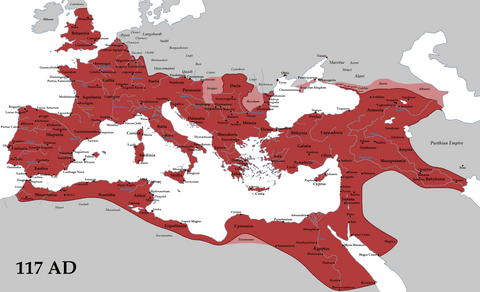
During its peak, the Mongol Empire occupied twice as much as land as the Roman Empire.  It is known as the largest contiguous empire in history (the later British empire was larger, but not contiguous).  This was partially due to Geography – the Mongols were very adept horse warriors, and the wide sweeping plains of Central Asia enhanced their mobility.  They did less well in mountainous regions such as Korea and northern India.  The Romans had to deal with starting out on a peninsula, had to build a navy as well as a land military force, and had fairly well-armed opponents, making it much harder for them to expand to the same reach.   Thus, by sheer size alone, the Mongols win hands down.Roman Empire Expanse

Time

The Roman Empire, at least the East side, lasted over a thousand years (1500 if you count from the founding of the Republic), while the Mongol Empire grew and fell relatively quickly in about a century and a half.  Even the less-successful East side of the Roman Empire still lasted an impressive 400-500 years.  The Romans take the cake here.

Peace and Trade

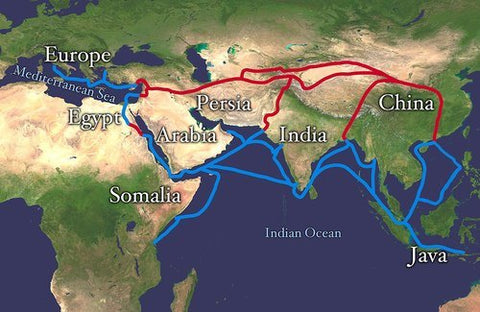
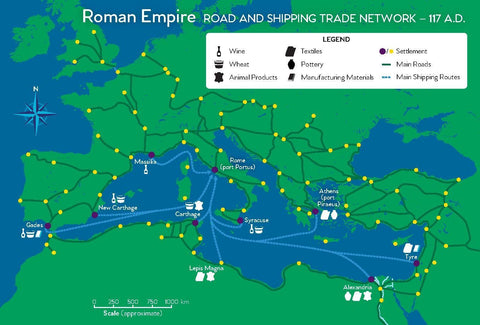
Both Empires had created a Pax (peace) across their empire which allowed trade to flourish.  Both built a system of roads across their empire which allowed rapid communication.  Goods from one end of the empire could reach the other easily, and sometimes quite far beyond. The Monglian routes were fast – some estimate messages could be carried as fast as 200km a day.  They also formed a sort of insurance system where if merchants were attacked they could get reimbursed from the imperial treasury.  The main reasons for the Pax Mongolica’s decline were the outbreak of the Black Death and the fracturing of the Empire due to political and religious differences. 

Silk Road

Rome’s peace, on the other hand, was less effective.  While the Pax Romana indicated a period without civil unrest, the Empire was rarely at peace with its neighbors and often had to quell revolts.  While the Mongol Peace lasted only about half the time of the Roman Empire’s, it was much more effective. Thus, the Mongols win here.Roman Trade Routes

Population

Because world population changed through time and the empires were not direct contemporaries, it is more fair to compare them based on percentage or proportion of the world’s population under their control rather than absolute numbers.  The Romans controlled nearly 55 million people for a whopping 1/6th to 1/4th of the world’s population.  The Mongols controlled 110 million people for slightly more than 25% of the world’s population.  Thus, here we are going to give it to the Mongols, though not by much.

Weapons

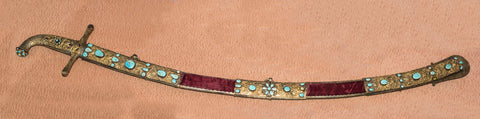
While both empires used many different weapons in the course of carving out their lands, we’re going to focus on the swords they used. The Mongol Empire used weapons similar to Chinese Dao – single-sided swords that were easy to use from horseback.  As the Empire reached farther west, they adopted Persian weapons such as the Scimitar.

Scimitar

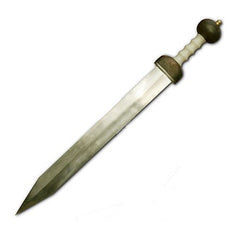
The Romans, on the other hand, used Gladius – double-sided swords about 40-60cm in length early on.  Later, they also adopted the use of Spatha – larger swords which were closer to a metre in length.

Gladius

There’s no clear superiority here, as the weapons were used in different situations and for different purposes.  They excelled at what they were meant to.  So, here we’ll give them a tie.

Conclusion

With a score of 4-2, the Mongols win here.  They controlled more land and people, built a more effective peace, and used their weapons to great effect.  The Romans were less effective, though still great by any measure. 

See Our Swords


source https://www.bladespro.co.uk/blogs/news/roman-empire-vs-the-mongol-empire-part-2

Chinese Women Warriors

Besides Hua Mulan, there have been many other Chinese warrior women throughout history.  Today, we are going to take a look at 3 very special women.

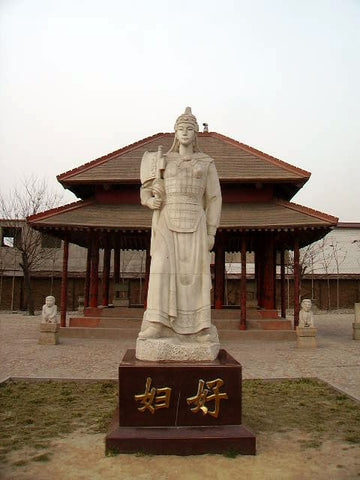
Fu Hao

Fu Hao

One of the earliest female Chinese leaders we know of, Fu Hao was, until recently, fairly unknown due to most records of her accomplishments not surviving due to her life preceding the invention of paper.  However, with her tomb recently unearthed, we have began to understand just how interesting a woman she really was.

One of Shang Dynasty King Wu Ding’s 64 political wives, she rose to become a wife in truth, the second in rank of only 3.  While she had a child through difficulty, Prince Jie, it seems her primary role was as a military leader.  She commanded a retinue of 13 thousand soldiers with at least two generals serving under her, making her the most powerful Shang leader of the time. Her people had had been fighting a group known as the Tu-Fang for generations.  She managed to end the generational conflict in a single decisive battle.  She also fought numerous engagments with other nearby nations.

It seems she was particularly revered by the emperor – after her death, he would offer ritual sacrifices at her burial place, asking her spirit for help in battle.  Strangely she was buried away from the royal family across a river, Thankfully for us, this means her tomb is the only royal Shang dynasty burial place that has survived unlooted, letting us learn about her through oracle bone inscriptions as well as the many personal items filling her tomb.

Xun Guan

Xun Guan

Xun Guan was possibly the youngest female Chinese military leader.  Her father, the governor of Xiangyang, was attacked by one of his officials in a coup attempt . The only way to survive was if a small force could break through the siege and commandeer reinforcements from a nearby city.  The only one with a plan the governor thought could work was Xun Guan – his 13-year old daughter.  The young but very brave leader managed to lead a sneak attack at night that got them through enemy lines, allowing them to make it to Pingnam, where she requested help.  Her father’s ally General Shi Lan was willing, but unsure if he had enough troops to turn the battle.  He suggested she write a letter to a nearby General Zhou Fang in another city and request more troops.  She did, and together the 3 leaders and their forces headed back to save her father.  Her father recognized the opportunity, and, with a two-pronged attack, the 3 leaders managed to destroy the siege and route the attackers.

Ching Shih

Ching Shih

Considered the most successful pirate in all of history, she started her life as a lowly prostitute on a floating Chinese brothel.  A successful pirate Cheng I took notice of her and married her.  Apparently well-aware of her valuable non-sexual attributes (some wager the real reason for their marriage), he entered into a contract with her that gave her 50% ownership and control over all his endeavors.  Shih and Cheng adopted one son Cheung Po Tsai for the purposes of legal succession and Shih bore two others.  Cheng and Shih used soft and hard power to form an alliance with other pirates, forming the Red Flag Fleet.

When Cheng I died, Shih acted quickly to gain the loyalty of the other captains and fill the leadership vacuum.  Working together, Shih and her stepson Cheung managed quick success, which apparently led to them becoming lovers.  In time, they managed to assemble a fleet of several hundred ships with crew numbering in the tens of thousands.  They were so successful that, in their heyday, they fought against the British, Portuguese, and Qing.  Easily winning against the Qing dynasty ships, they struggled against and were finally forced to surrender to the Portuguese navy.  That same year, the Qing dynasty gave an amnesty to all the pirates (minus a few hundred to set an example), and Ching Shih and Cheung Po Tsai accepted it.  Asking for their legal status as mother and child to be dissolved, which was approved, they got married and had two children.  She opened a brothel and lived to a ripe old age of 69, dying surrounded by family.

See our Swords


source https://www.bladespro.co.uk/blogs/news/chinese-women-warriors